
How to shop your own perfume collection
Wanting a new perfume is usually wanting a new feeling. Buying a bottle is one way to get there. Looking properly at what you already own is another, and it is the one almost nobody tries first.
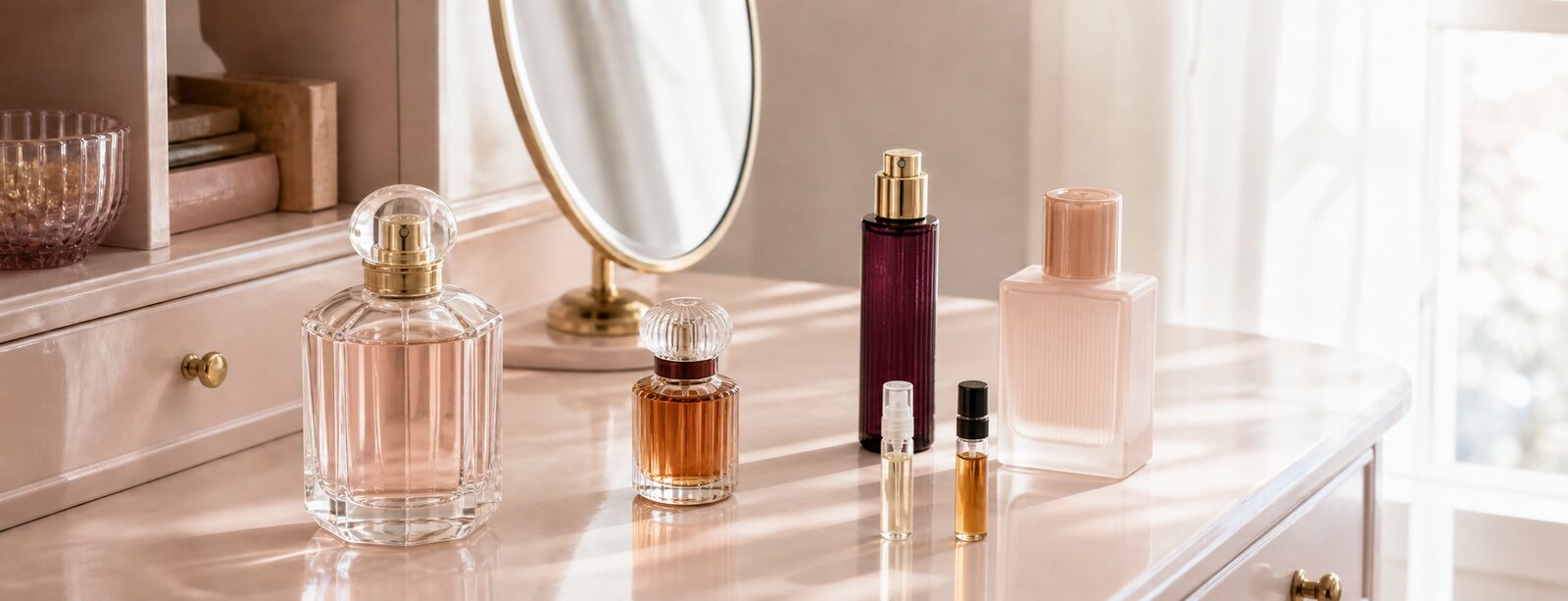
Start with the feeling, not the fragrance family
Before you open a shopping app, ask what you are actually after. Do you want to feel clean and clear-headed? Warm and protected? Playful, or noticeable? Put together for work? Unwound at home? Simply unlike your usual self?
That question is more useful than asking which notes you want, because the same note does very different jobs. Vanilla can be airy, edible, smoky or formal. Citrus can sparkle, or turn bitter, soft or soapy.
Write down two or three words for the experience you are after. Those words are your brief.
Make the invisible bottles visible
The perfumes you remember are not the same set as the perfumes you own. Samples stay in pouches. Travel sprays move between bags. Bottles disappear behind taller bottles. Gifts stay in their boxes.
Gather everything in one place if that is practical. If it is not, write a simple list that says where each one lives, and keep full bottles, travel sizes, decants and samples apart. The point is not tidy administration. It is getting your options back in view.
You may find that the gap you were about to fill is already covered by three things you never see.
Build a discovery tray
Pick five to eight fragrances and put them together somewhere you will pass them, for a week or two. A useful mix:
- One reliable favorite.
- One you have not worn in months.
- One sample you never properly tested.
- One that seems wrong for the current season.
- One chosen purely out of curiosity.
A small tray changes how choosing feels. It cuts the visual noise of everything at once and puts the less familiar options within reach.
Do not try to wear them equally. A discovery tray is an invitation, not an assignment.
Test them the way a store would make you
We give a new perfume more attention than one we have owned for two years. That attention is the part worth copying.
Spray one on skin and let it develop. Avoid stacking several strong fragrances the same day if you want to follow the whole arc. Notice the opening, the middle hours, and what is left at the end of the day.
Then ask the things a sales counter cannot answer:
- Does this fit the day I actually have?
- Do I enjoy it when nobody else is around?
- How does it feel four hours in?
- Would I reach for it again next week?
Your own shelf gives you something no store can: time. That is the whole advantage, so use it.
Look for new settings, not only new notes
A fragrance changes with its context. Try an evening perfume on a quiet afternoon. Wear a summer scent on a cold, bright day. Use the special bottle for dinner at home on a Tuesday.
This is not an argument for ignoring comfort or the people around you. Heat, small rooms, work and other people's sensitivity all still apply. It is about noticing which of your habits quietly turned into rules.
Often the novelty you were shopping for is just an existing perfume in a setting you never tried.
Keep a waiting list
If you still want the new bottle, write it down with the date and what drew you to it. Come back to the list after a few weeks with your own collection.
You may want it just as much, and now you are buying it on purpose. Or you may find a decant you had forgotten was already giving you the thing you were looking for.
The point is attention, not restraint
None of this should turn perfume into a moral exercise. It is not a test of whether you have earned another bottle, and buying one is not a failure of this method.
What you already own is a record of things that caught your eye. Looking again takes those choices seriously, and it tends to reveal that discovery was never limited to the next release.
Related guides
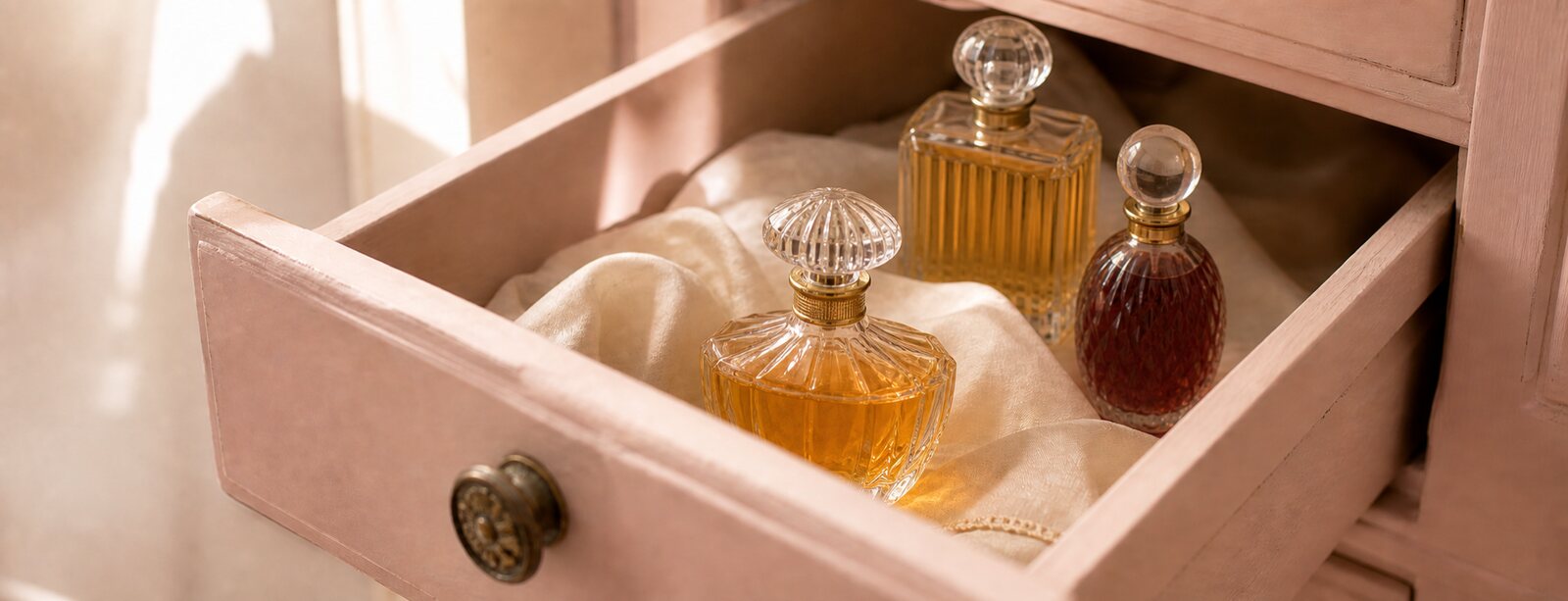 Rediscovering a forgotten perfume: why it feels so joyful
What scent really does with memory, and how to give a forgotten perfume another honest try.
Read guide
Rediscovering a forgotten perfume: why it feels so joyful
What scent really does with memory, and how to give a forgotten perfume another honest try.
Read guide
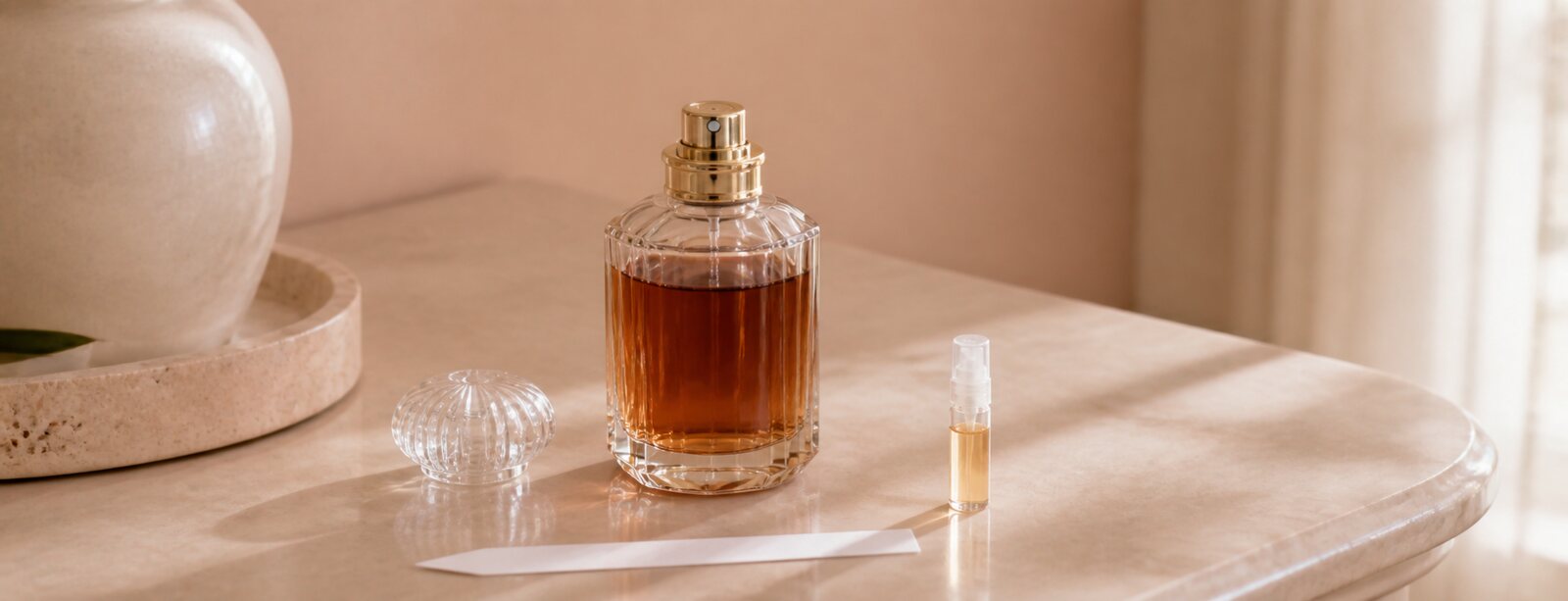 Does perfume expire?
Perfume has no expiry date the way food does. What the 12M symbol means, and how to tell a bottle that has turned from one that has merely darkened.
Read guide
Does perfume expire?
Perfume has no expiry date the way food does. What the 12M symbol means, and how to tell a bottle that has turned from one that has merely darkened.
Read guide